
Why LIMS and ELN knowledge is hard to reuse
Context matters. Relationships matter.
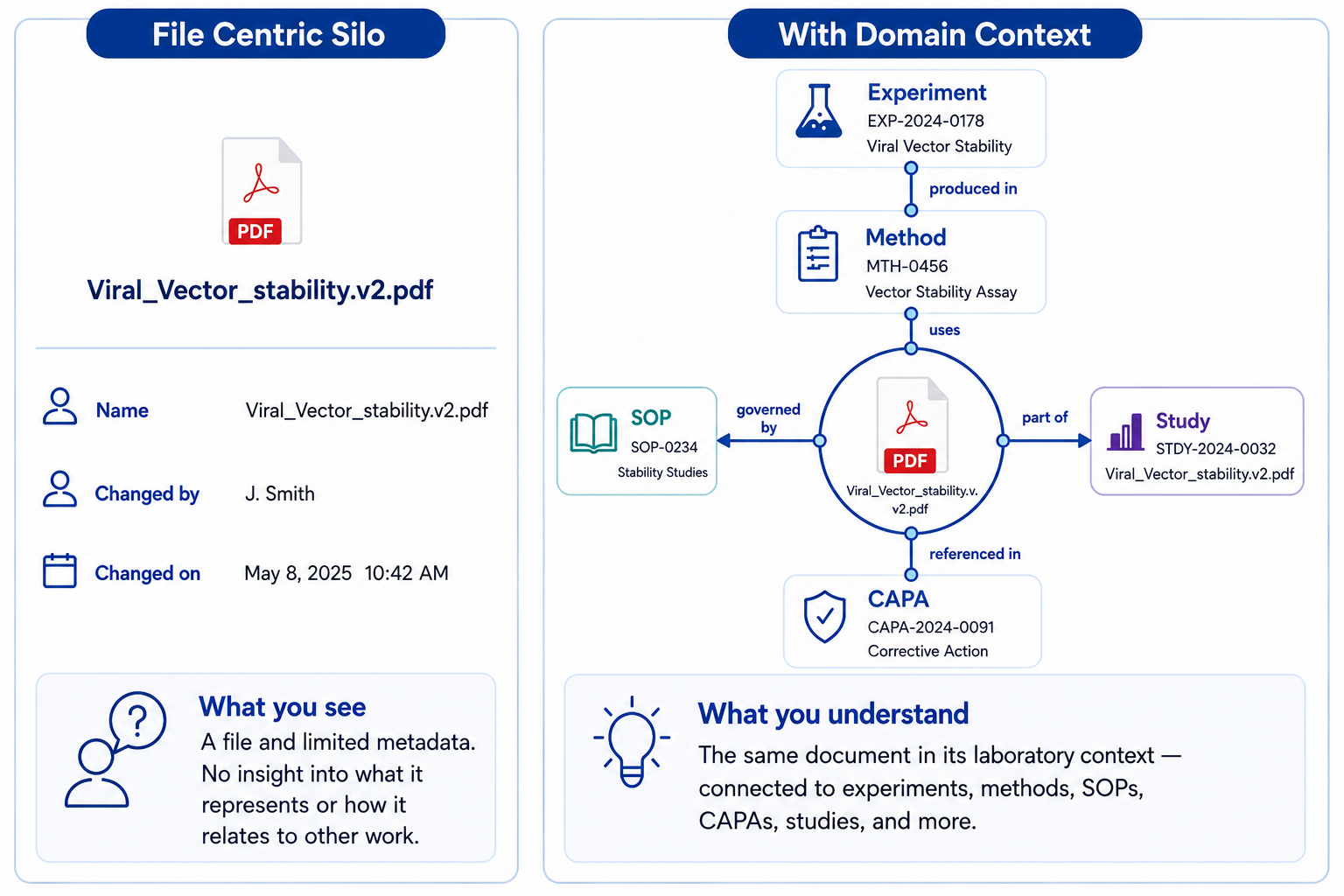
A standalone document is not laboratory context. Valuable context includes the experiment, method, SOP, study, CAPA, and other laboratory objects it relates to, and the relationships among them.
AI knows what an SOP is in isolation. Labcelerate knows which laboratory work that SOP belongs to.
Structured search vs actual operational questions
In most LIMS and ELN environments, search is limited to document metadata such as filename, author, and change date. The knowledge organizations spent years accumulating across records, documents, images, and their relationships is largely invisible during search.
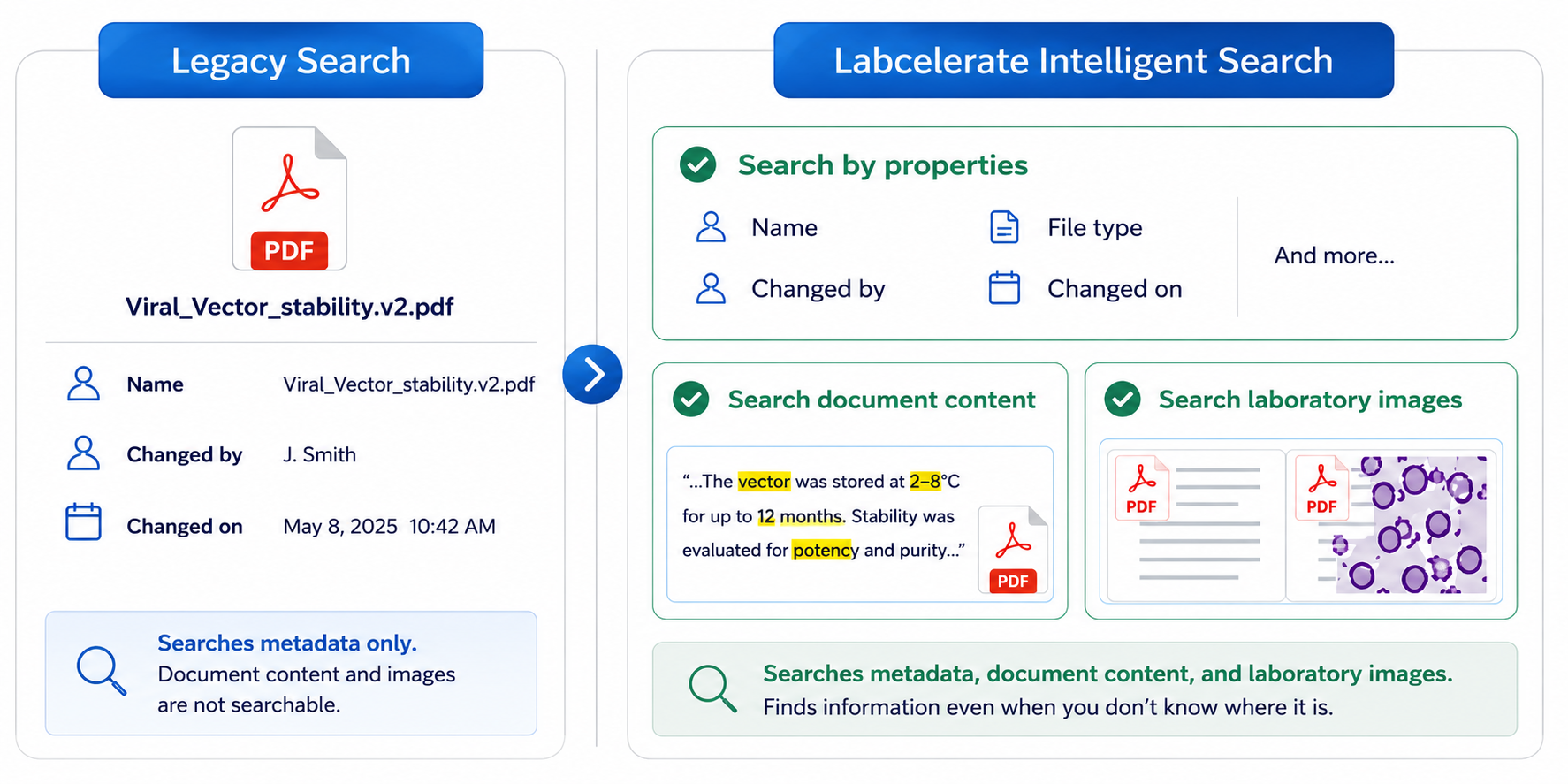
Structured search returns:
“Here are ten documents.”
The questions people actually need to answer look more like:
“Show me experiments which used SOPs mentioning hemoglobin handling on a Sysmex hematology analyzer in the last 3 years.”
Finding the right document is only the beginning. Its relevance depends on how it relates to experiments, methods, SOPs, CAPAs, studies, and other laboratory objects.
How laboratory objects connect
Laboratory work is organized around connected experiments, methods, SOPs, CAPAs, studies, and other domain objects, not isolated PDF files. Those relationships help determine whether prior work applies to today's question.
Labcelerate uses your laboratory domain model to follow those relationships, instead of treating records and documents as isolated search results.
Operational impact
Missing this context has practical consequences. Time is spent unknowingly re-deriving prior work, decisions land without relevant institutional knowledge, and planning proceeds from an incomplete picture of what the organization has already accumulated.
Quality of research
Time to result
Knowledge continuity
The same pattern appears in configuration: routines and dependencies accumulate faster than understanding. When the question is what else changes if this routine changes, see Configuration Intelligence.
Labcelerate helps teams surface institutional knowledge, understand it in laboratory context, and apply it with confidence.
Request early access · Operational Intelligence · Configuration Intelligence